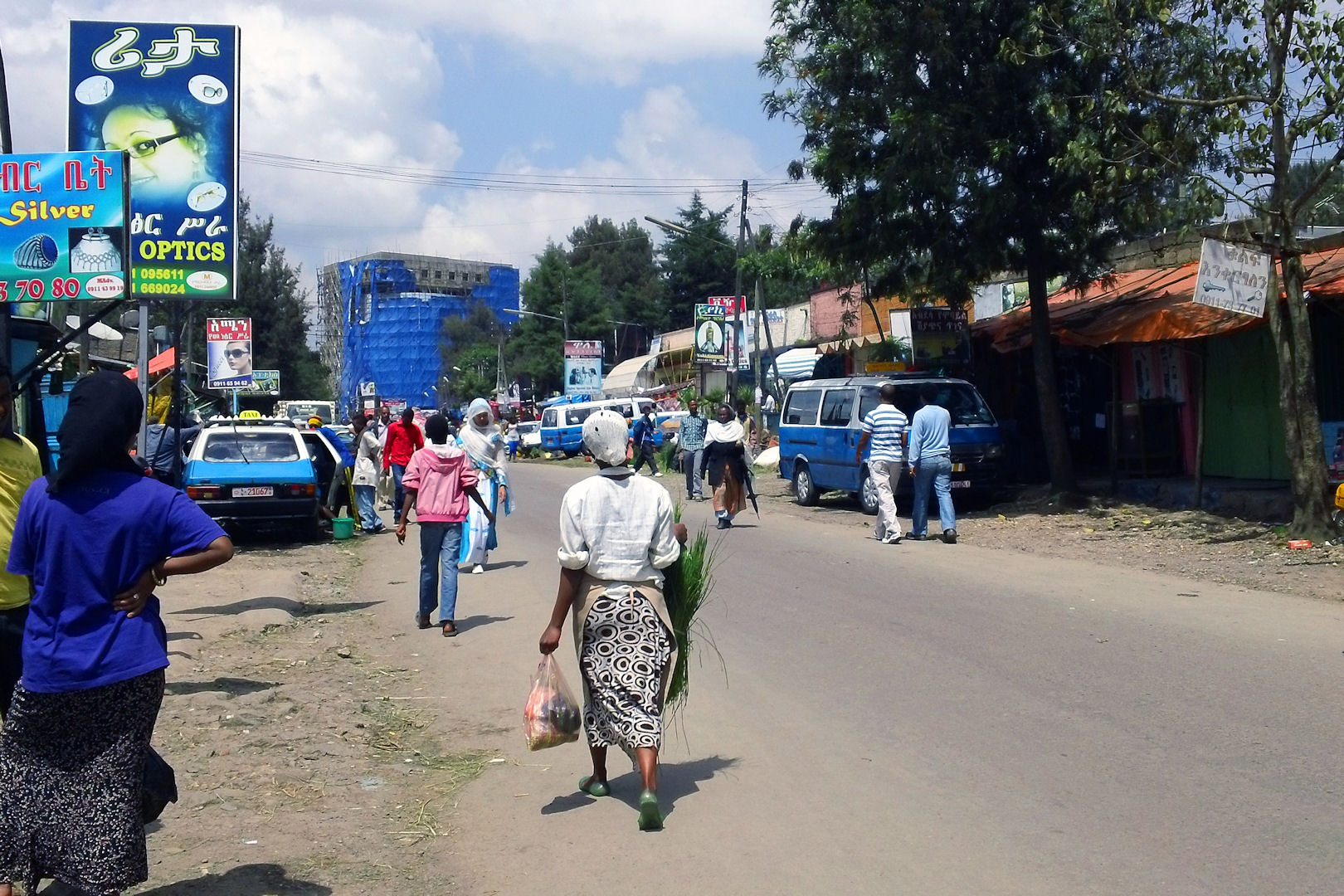
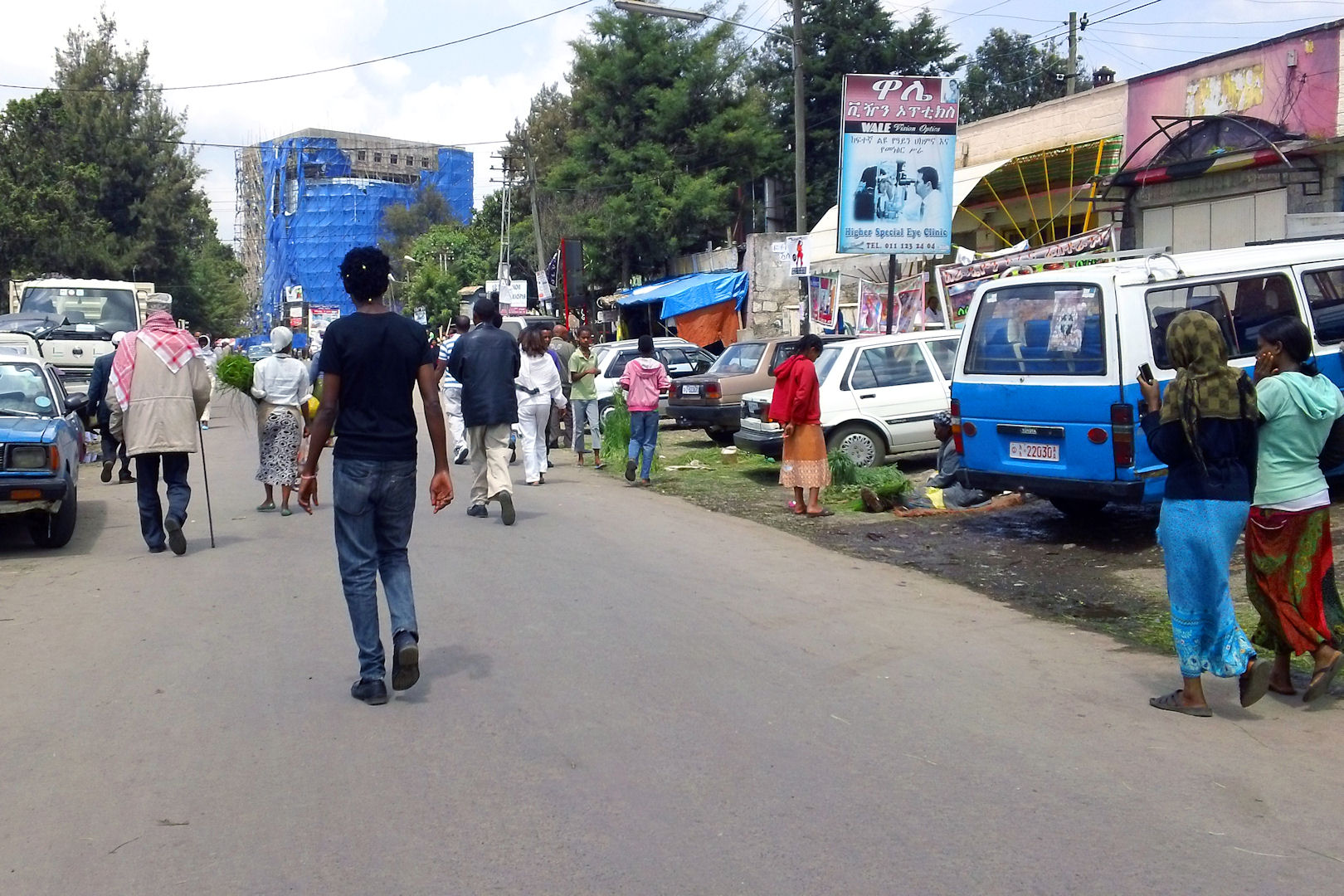
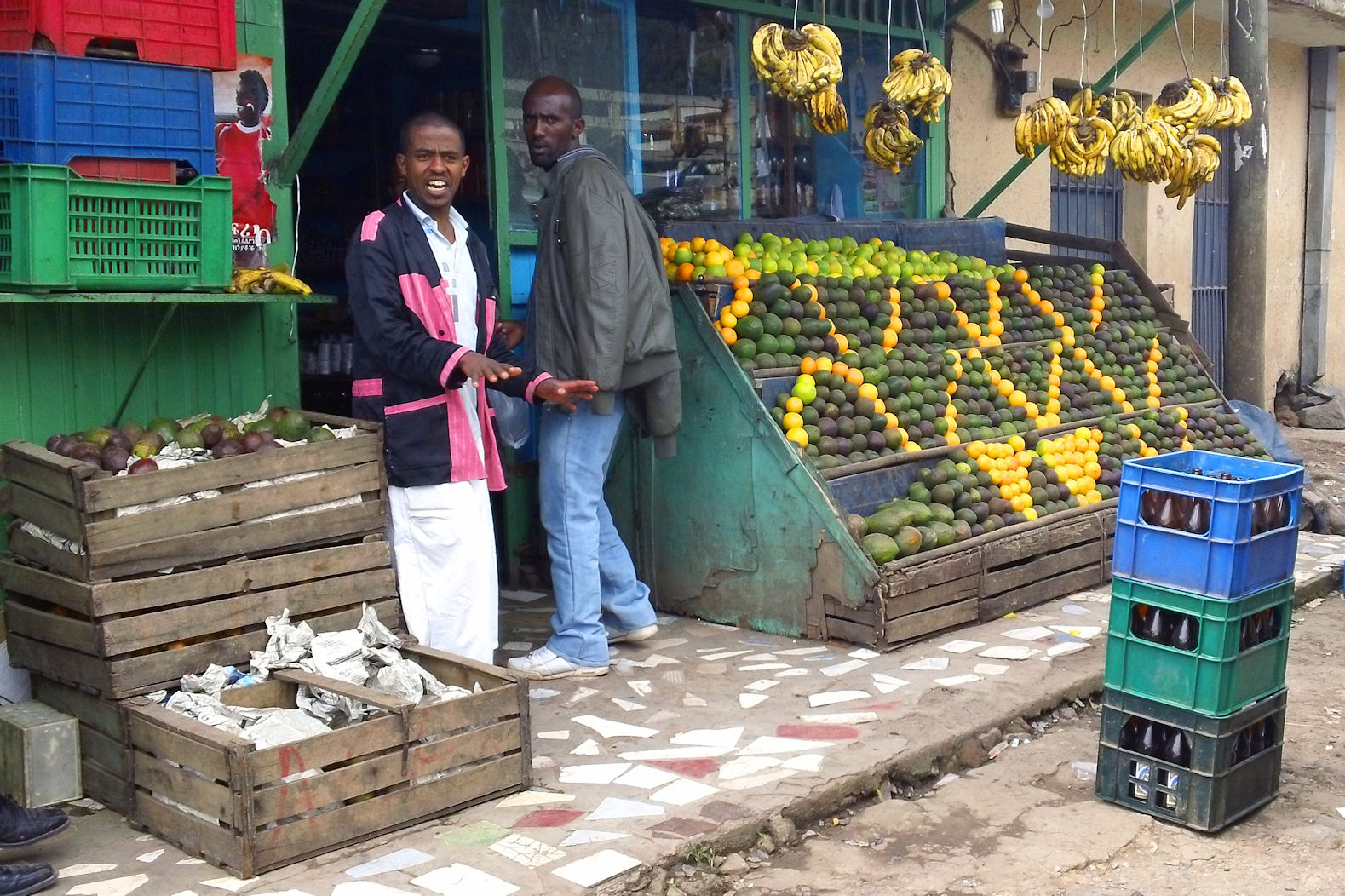
Debre Berhan was
founded by
Emperor
Zara Yaqob,
in response to a
miraculous
light that was
seen in the sky
at the time.
Believing this
was a sign from
God
showing his
approval for the
death by
stoning
of a group of
heretics 38 days
before, the
emperor ordered
a church built
on the site, and
later
constructed an
extensive palace
nearby, and a
second church,
dedicated to
Saint Cyriacus.
Zara Yaqob spent
12 of the last
14 years of his
life in Debre
Berhan.
Historian
Richard
Pankhurst
offers the date
of 1456 for the
date of the
founding of this
church,
providing a
plausible
argument that
the light in the
sky was
Halley's Comet,
which could have
been in Shewa
that year,
although the
traditional
dates (10th day
of the month of
Maggabit, i.e. 6
or 7 March) do
not coincide
with the days
that the comet
was most visible
(13 through 17
June).
The majority of
the inhabitants
of Debre Berhan
are
Ethiopian
Orthodox
Christians.
There
is now a new
Mosque in town
with an
increasing
number of
Muslims, perhaps
5 to 10 percent
of the
population. Both
religions get
along very well
in Ethiopia with
various family
members
belonging to
either religion.
The
Debre
Berhan
Wool
Factory,
the
first
wool
factory
in
Ethiopia,
was
launched
by
Emperor
Haile
Selassie.
It
started
production
on1
January
1965
with
120
spindles
and
6
looms.
In
its
first
six
months,
the
factory
produced
7,065
blankets
in a
single-shift
operation
with
a
labor
force
of
about
200,
of
whom
45%
were
women.
The
Derge
government
announced
3
February
1975
that
the
Debre
Berhan
Wool
Factory
was
among
14
textile
enterprises
to
be
fully
nationalized.
Debre
Berhan
is
also
a
famed
center
of
rug
making.
The
following
commentaries
are
from
Betty
McLaughlin
Hagberg,
who
served
in
Debre
Berhan
in
1964.
(Important
note: All
photographs,
except where
mentioned,
are copyrighted
as of October 8,
2012, by Darrel
and Betty
Hagberg. Please
request
permission to
use and please
credit them).